
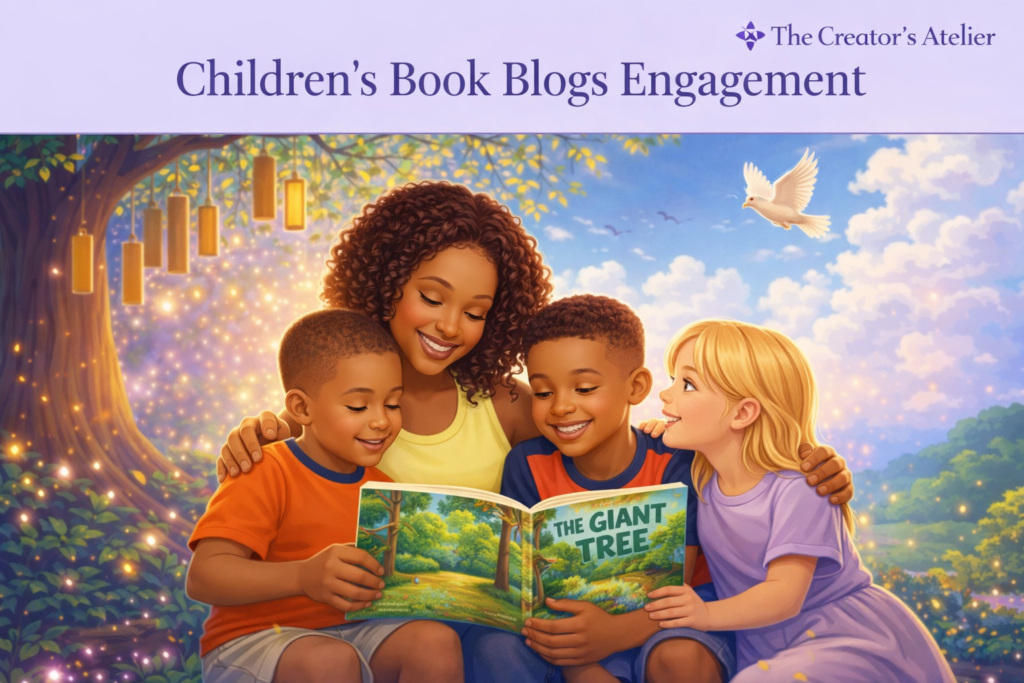
Children don’t fall in love with reading by accident. They fall in love with it because someone—parent, teacher, librarian, or volunteer—invited them into a world where books feel alive, welcomed, and worth returning to.
Book engagement isn’t just about getting through pages; it’s about awakening curiosity, imagination, and the desire to explore ideas bigger than themselves.
In a world filled with screens and constant distraction, creating meaningful engagement around books is one of the most powerful gifts we can give children.
Why Engagement Matters
When children are actively engaged with books, several things begin to form:
1. Intrinsic Motivation
They read because they want to, not because they have to.
This builds lifelong readers, not just task completers.
2. Literacy & Language Skills
Exposure to stories expands vocabulary, strengthens comprehension, and supports writing in a natural, joy-filled way.
3. Imagination & Creativity
Stories train children to visualize, to ask “what if,” and to imagine worlds beyond the immediate.
4. Empathy & Emotional Growth
Characters become teachers in their own right—helping children recognize feelings, challenges, courage, and kindness.
5. Faith & Moral Formation (optional tie-in)
For spiritual households and church communities, stories become gentle bridges to deeper truths about love, goodness, purpose, and God’s heart for the world.
What Engagement Actually Looks Like
Engagement isn’t quiet compliance. It often looks like:
- children asking questions
- wanting to retell the story later
- connecting characters to their own lives
- drawing scenes or acting them out
- begging to “read another chapter!”
- talking about the book after the session ends
These are signs the story is working.
How We Can Improve Engagement
Here are practical strategies that consistently deepen interest and participation:
1. Read With Expression
Tone, pacing, and voice matter. Children lean into energy.
2. Invite Discussion
Ask open questions like:
“Why do you think they made that choice?”
“What would you have done?”
“How do you think they felt?”
This turns reading into shared discovery.
3. Build Community Around Books
When children feel part of a group, motivation increases.
This is why book clubs, classrooms, libraries, and Sunday schools are powerful ecosystems.
4. Pair Books With Activities
Simple companion activities work wonders:
- drawing a character
- re-enacting a scene
- matching emotions
- small crafts
- writing “a letter to the character”
This transforms passive reading into embodied learning.
5. Offer Choice
Children feel ownership when they help select titles.
Choice boosts interest more than we realize.
Where the Challenges and Opportunities Are
Many educators and volunteers quietly share similar struggles:
- inconsistent attendance
- short attention spans
- low excitement for reading
- competition with screens
- differing reading levels
But these challenges also point to opportunities:
- creating predictable rhythms
- offering hands-on connection
- building friendship-centered spaces
- integrating visual storytelling
- using modern illustration styles
- connecting stories to the child’s world
The more reading feels like culture—not just assignment—the more children engage.
If you’re a parent, teacher, librarian, or Sunday school volunteer:
What has helped the children in your life become excited about reading?
And equally:
What do you wish existed to make reading more engaging in your setting?
Your answers matter, because they represent real needs inside real communities—and they help creators, educators, and ministries build tools that serve children well.
Final Thought
Children learn best when stories are not merely read, but shared—in community, with joy, and with belonging.
When we cultivate engagement, we’re not just raising readers.
We’re raising thinkers, dreamers, storytellers, and compassionate citizens of God’s world.
Books hold the door open.
Engagement invites them to step through.